Lawn Restoration Under Shade Trees Done Right
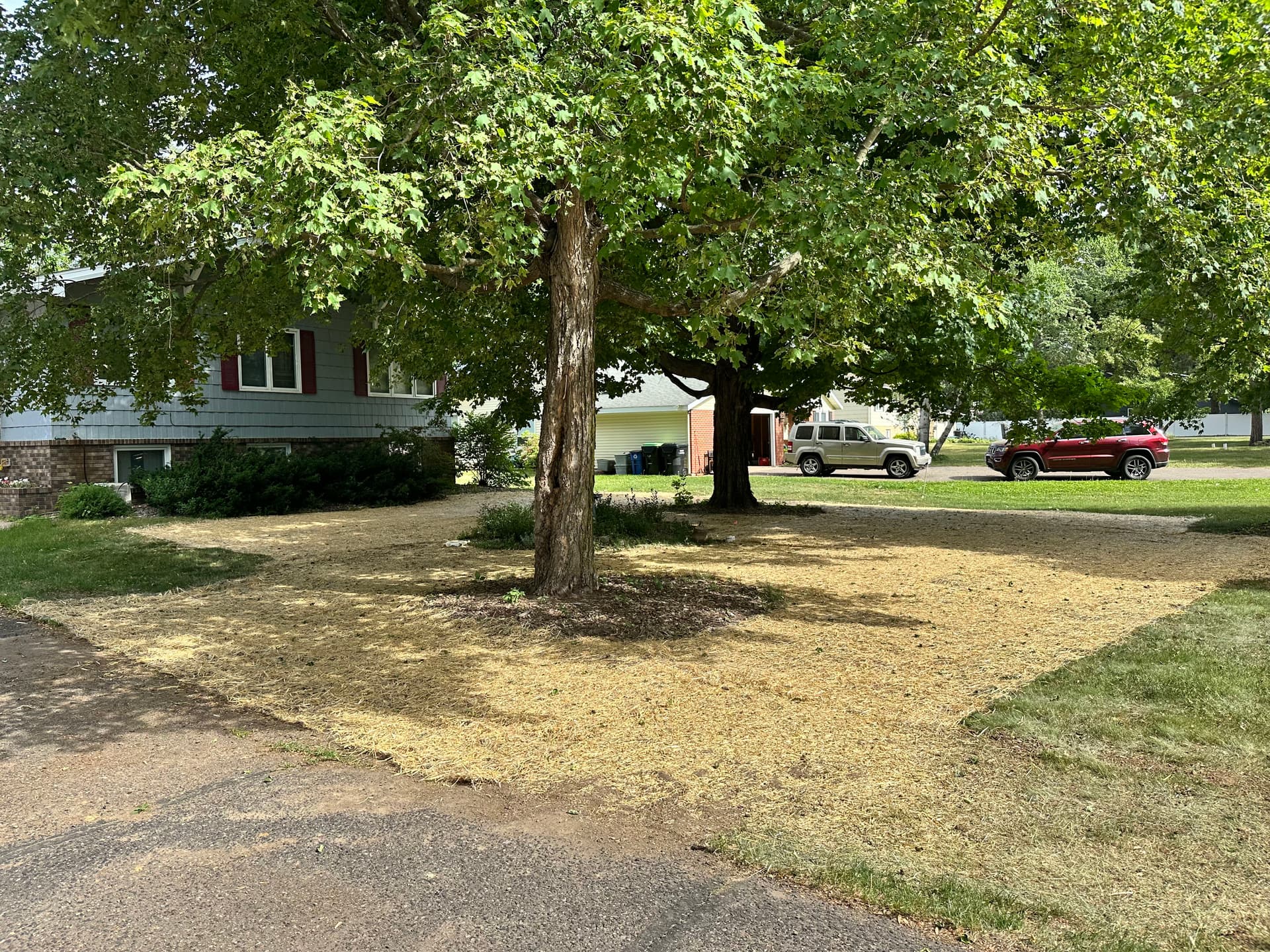
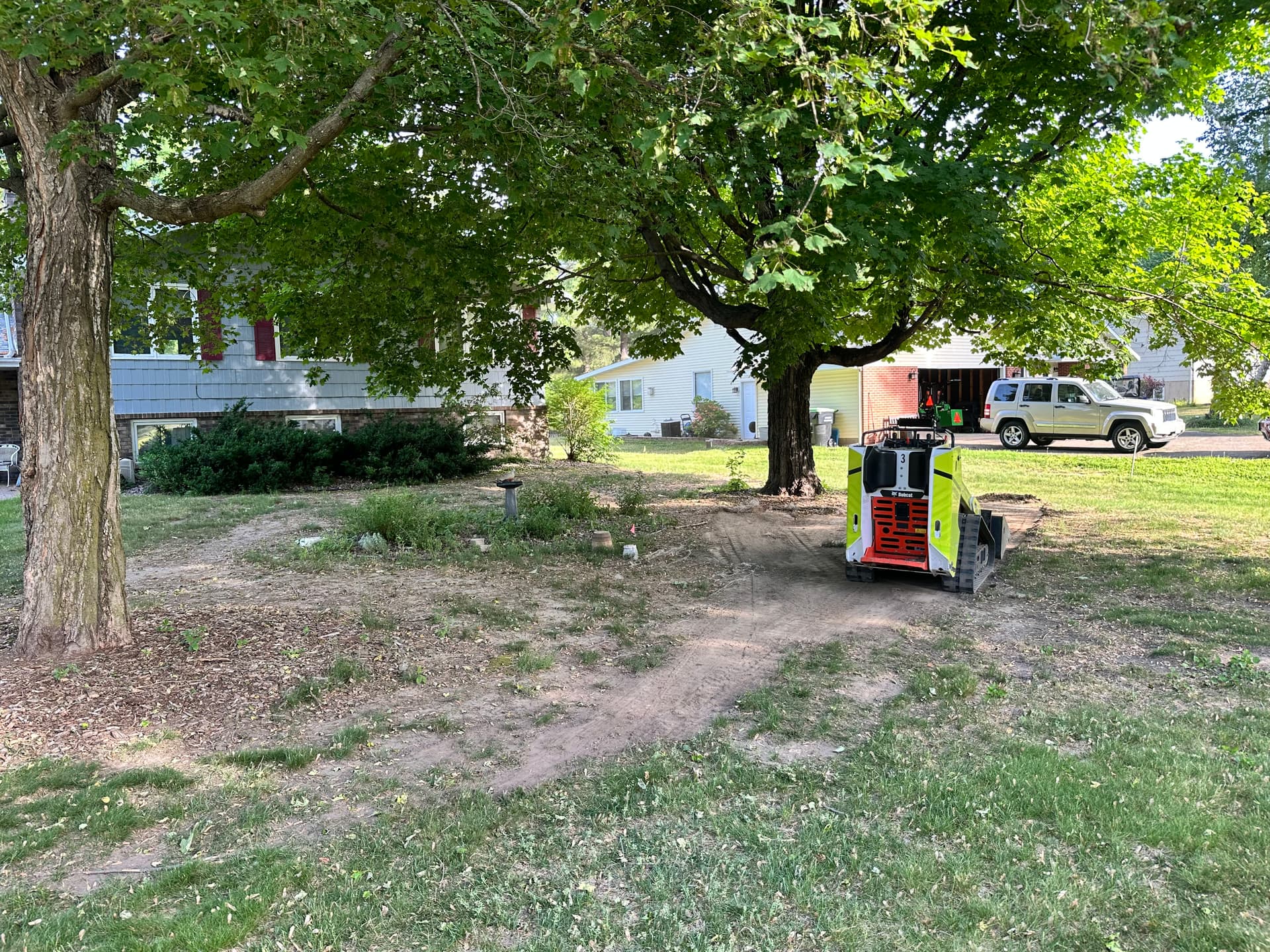
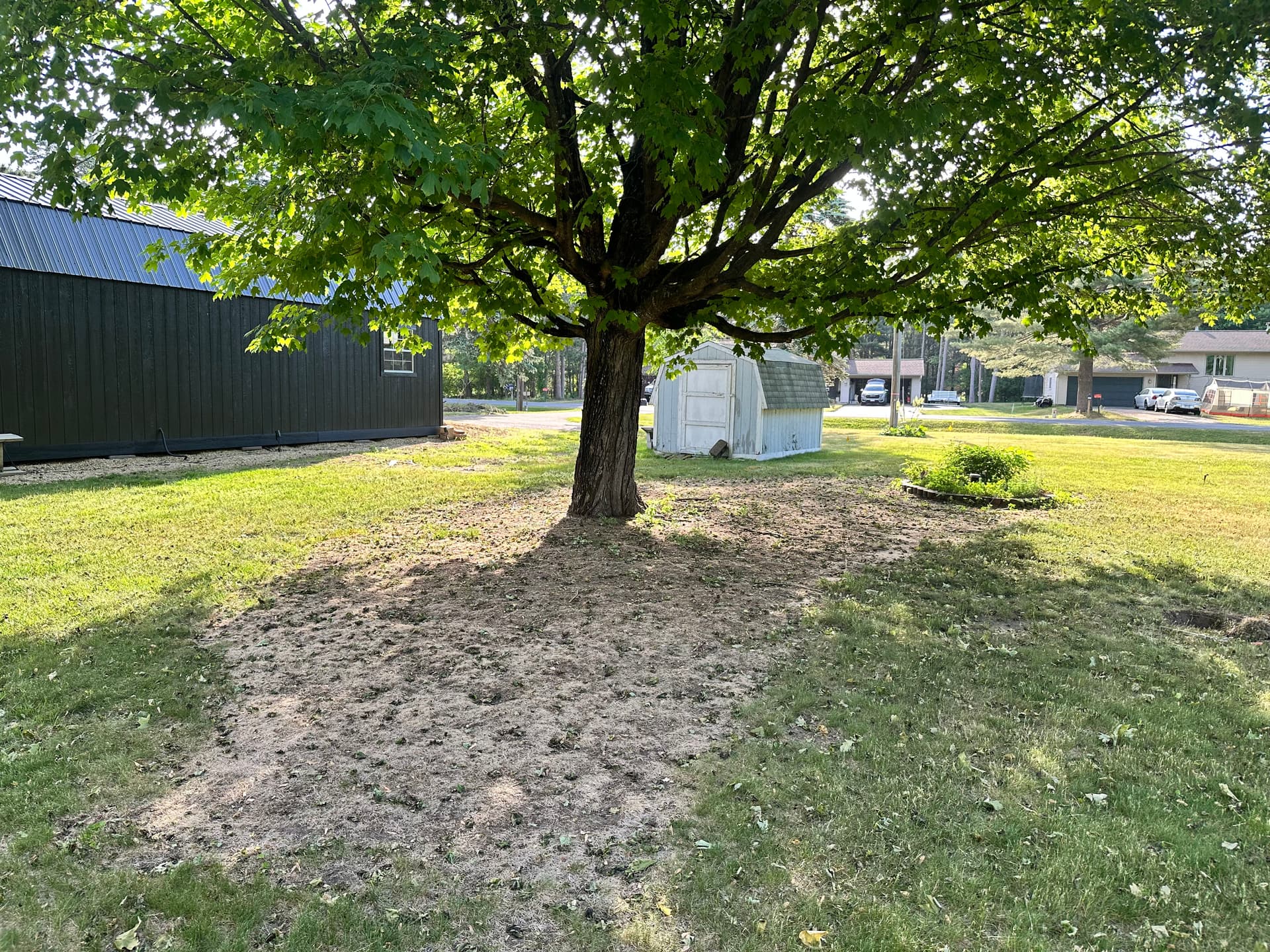
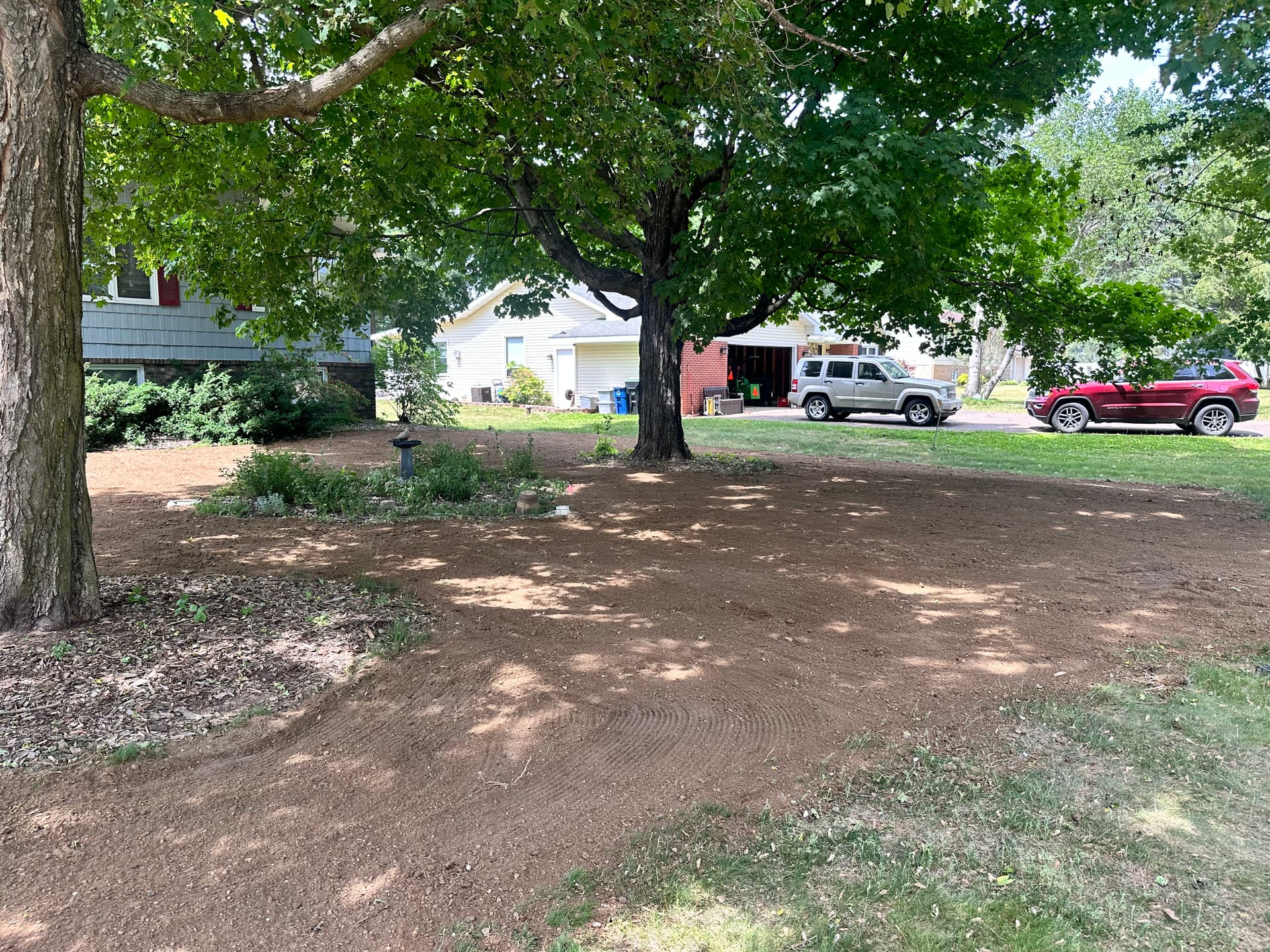
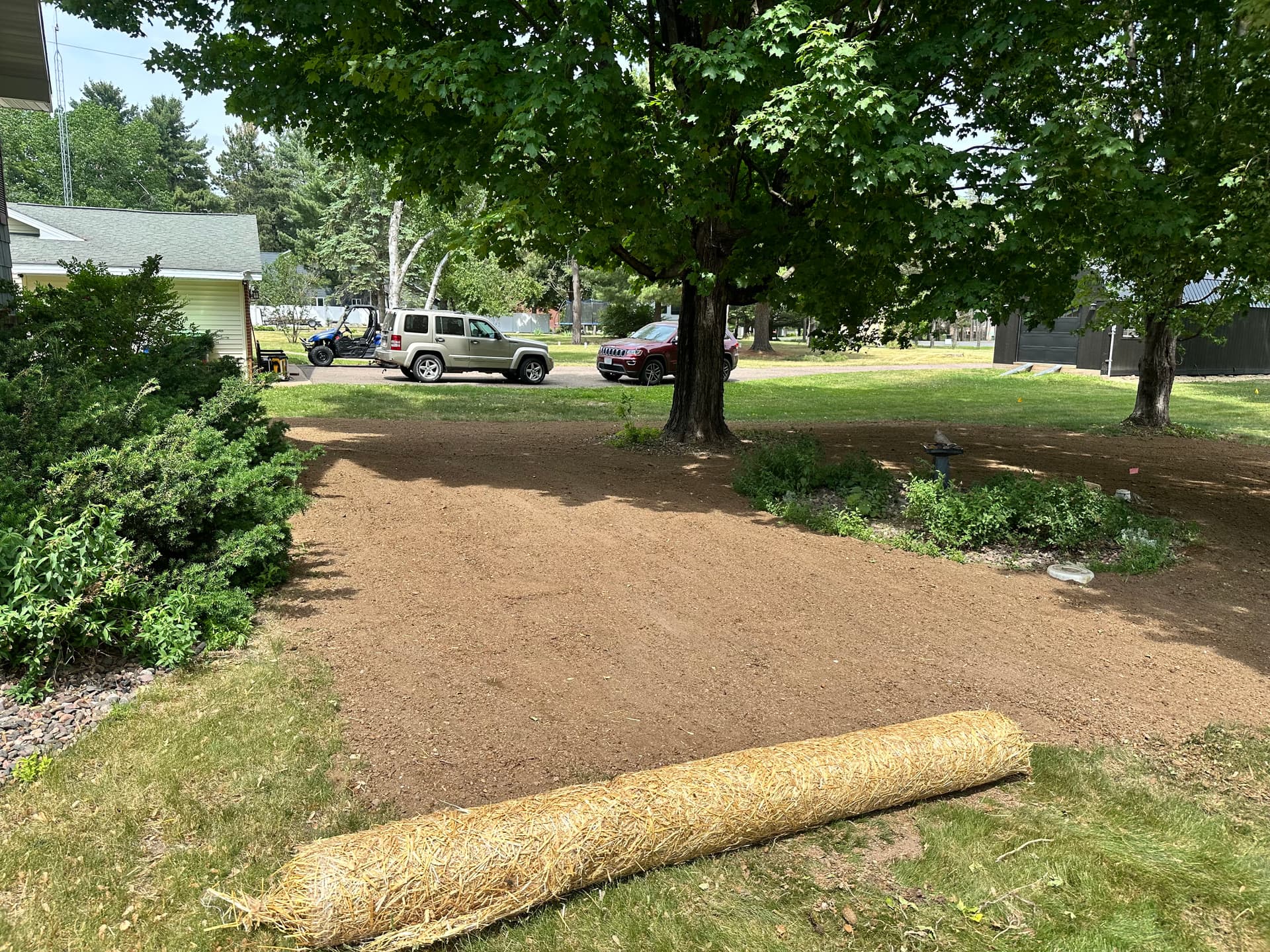
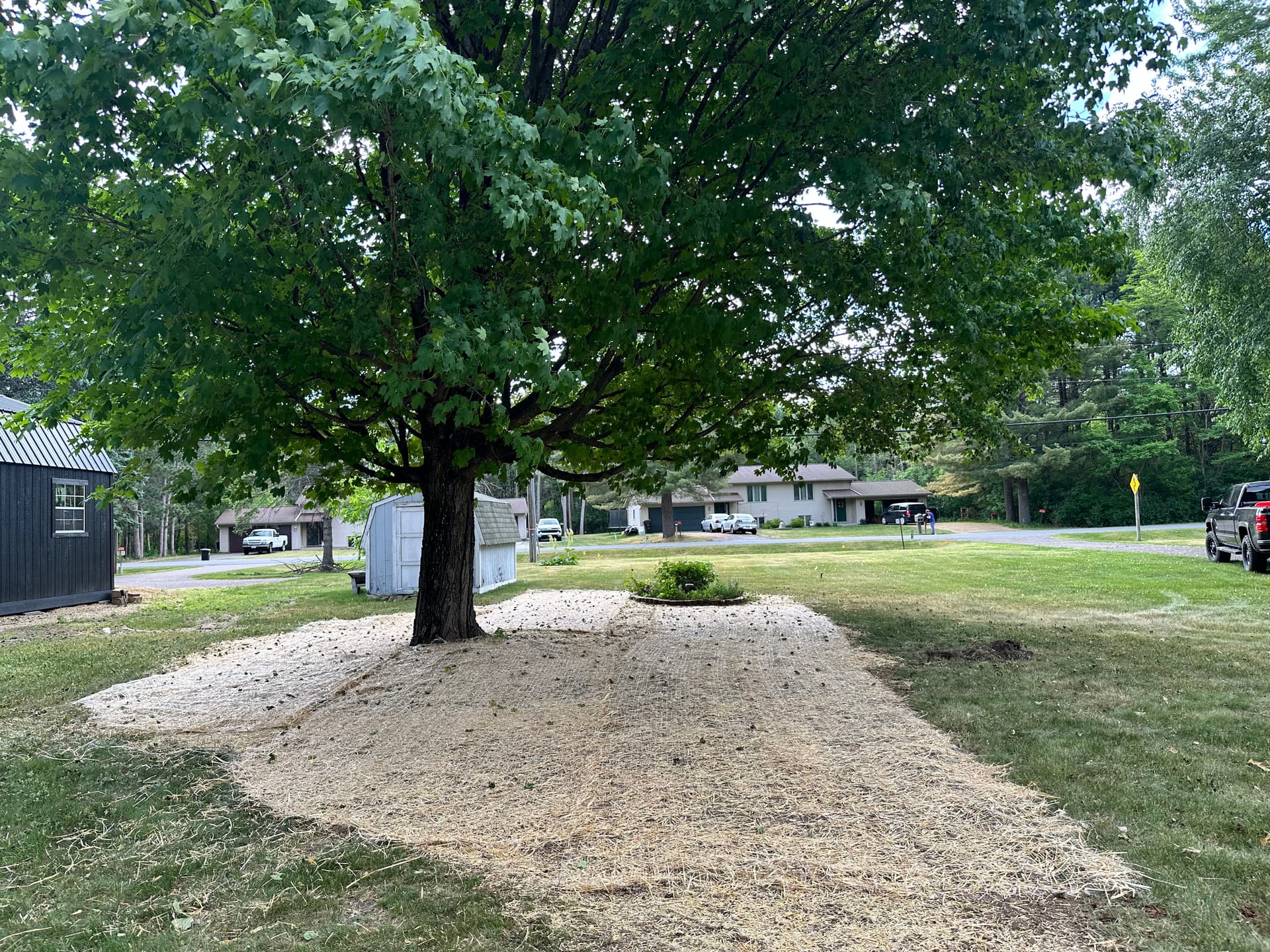
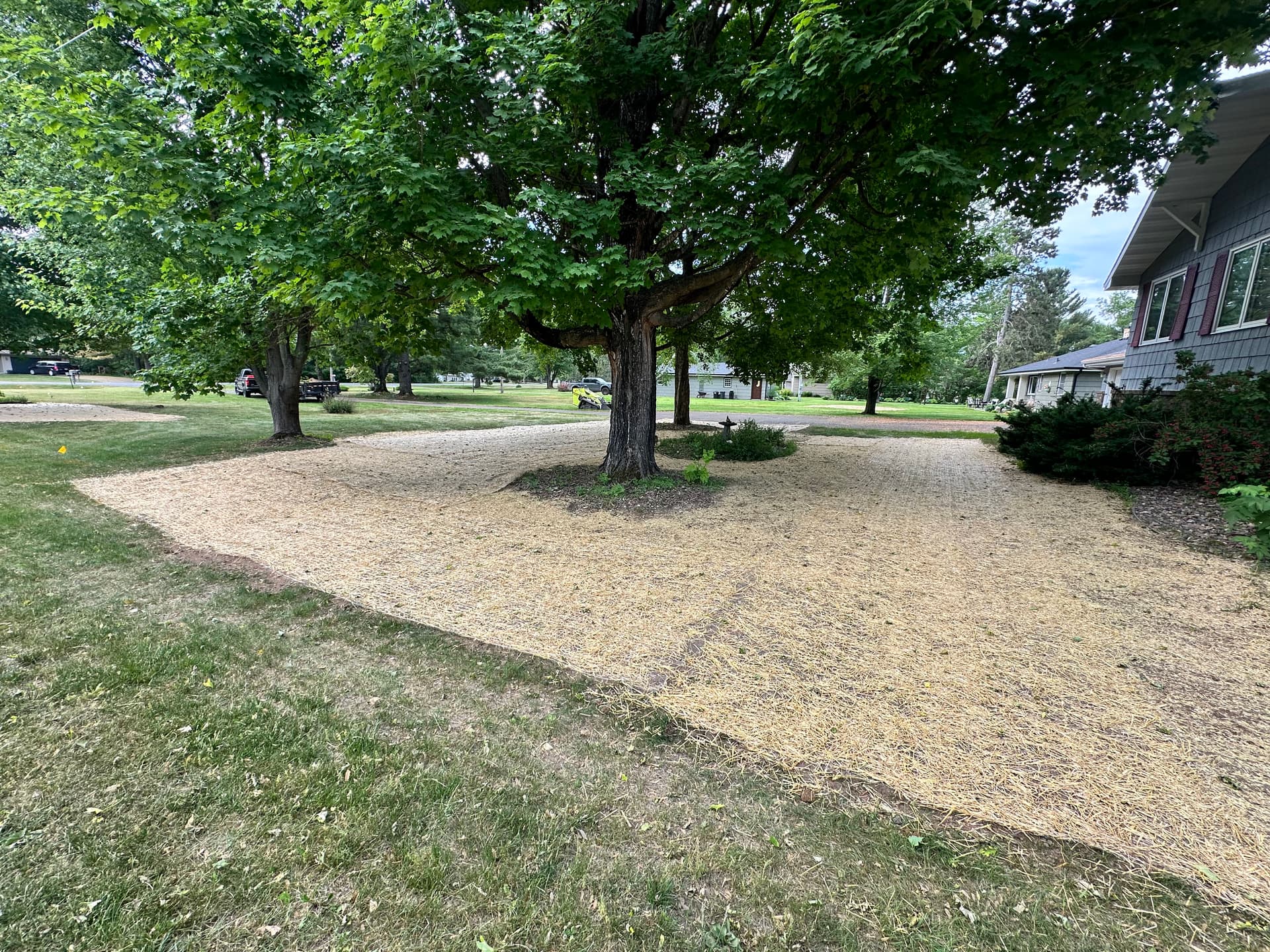
That bare, patchy dirt under large shade trees is one of the most common lawn problems we run into. The combination of dense overhead canopy blocking sunlight, tree roots competing for water, and sandy soil that dries out fast - it creates a tough environment where standard grass seed just won't cut it. Throwing down a bag of generic seed and hoping for the best is a waste of time and money.
Here's what we were working with on this one: multiple large trees with wide canopies, compacted and sandy soil underneath, and essentially zero grass coverage across a pretty large area. Not a quick fix. We started by using a Bobcat to properly work the ground and get it ready to actually hold seed and amendments. That prep work matters more than most people realize.
Once the ground was ready, we brought in a topsoil and compost blend to improve what was there. Sandy soil drains too fast and doesn't hold nutrients well - amending it gives seed a real foundation to establish in. From there, we seeded the area with a dense shade mix, which is specifically formulated to germinate and grow in low-light conditions. Using the right seed variety for the specific conditions is the difference between this working and failing.
The final step was laying straw over the whole area. It holds moisture in, keeps the seed from washing away in a rain event, and helps regulate soil temperature while germination happens. Every step in this process has a purpose - none of it is filler.
Shady yards with problem spots like this are exactly what our lawn maintenance work is built for. It's not always as simple as mowing and moving on. Sometimes a lawn needs a ground-up approach to get it back to where it should be.